
Picture a woman in a rural Southeast Asian village. She cannot read or write. She speaks only her local dialect. She has a basic mobile phone but has never used a computer.
Question: How could technology possibly help her improve her life?
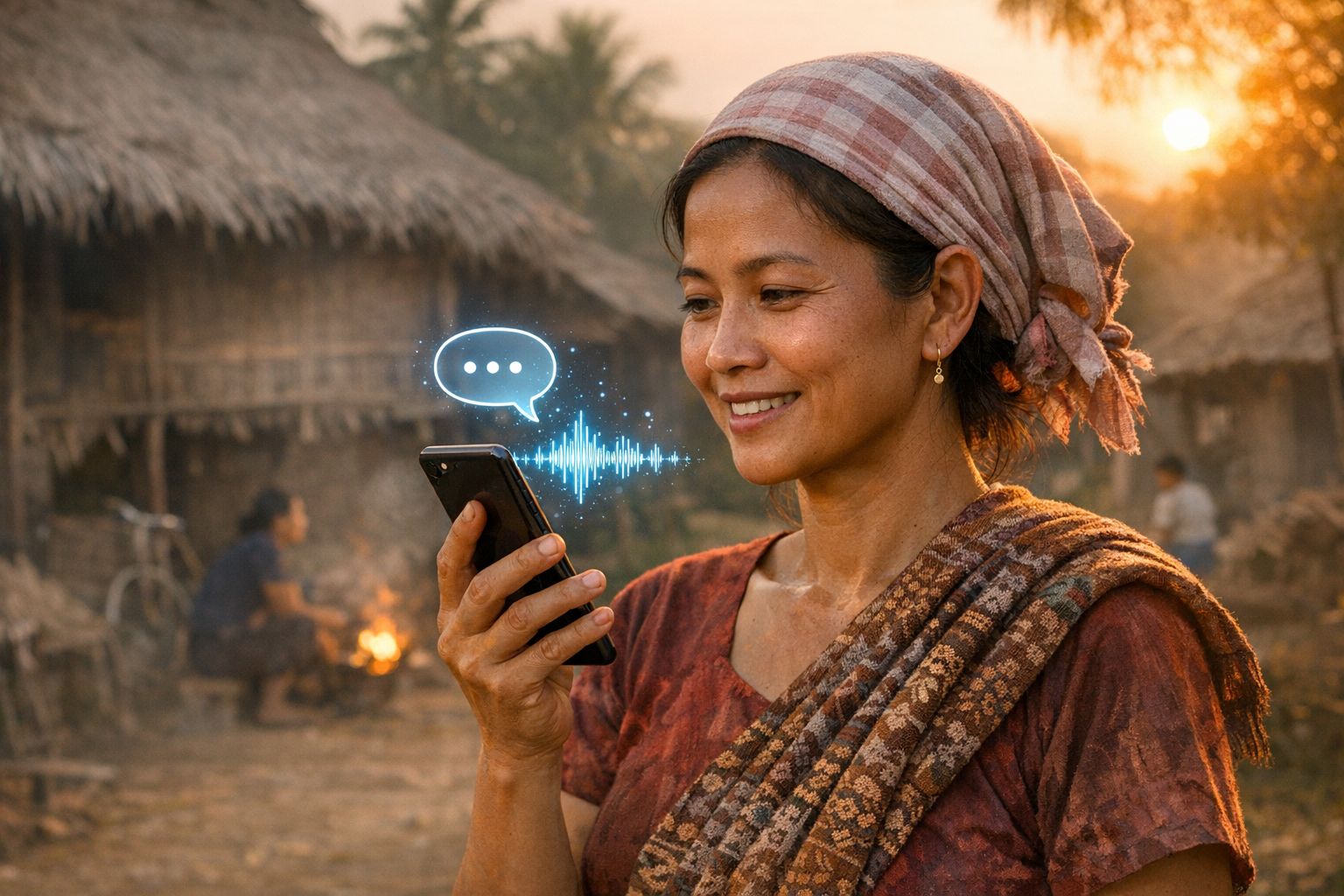
Take a moment to think: What barriers does she face? What would she need most? Healthcare information? Farming tips? Market prices? Access to training?
Now imagine if AI could speak to her in her own language, understand her voice, and provide exactly what she needs without requiring her to read a single word.
This isn't science fiction. It's happening right now. Let's explore how.
Artificial Intelligence is often associated with tech giants and advanced automation. But AI's most powerful application may be its ability to reach and empower the most vulnerable populations on Earth.
Whether you're a technologist, educator, policymaker, or global citizen, understanding how AI can bridge inequality gaps will help you:
Southeast Asia is home to over 670 million people, with rapidly growing digital economies. Yet significant inequalities persist.
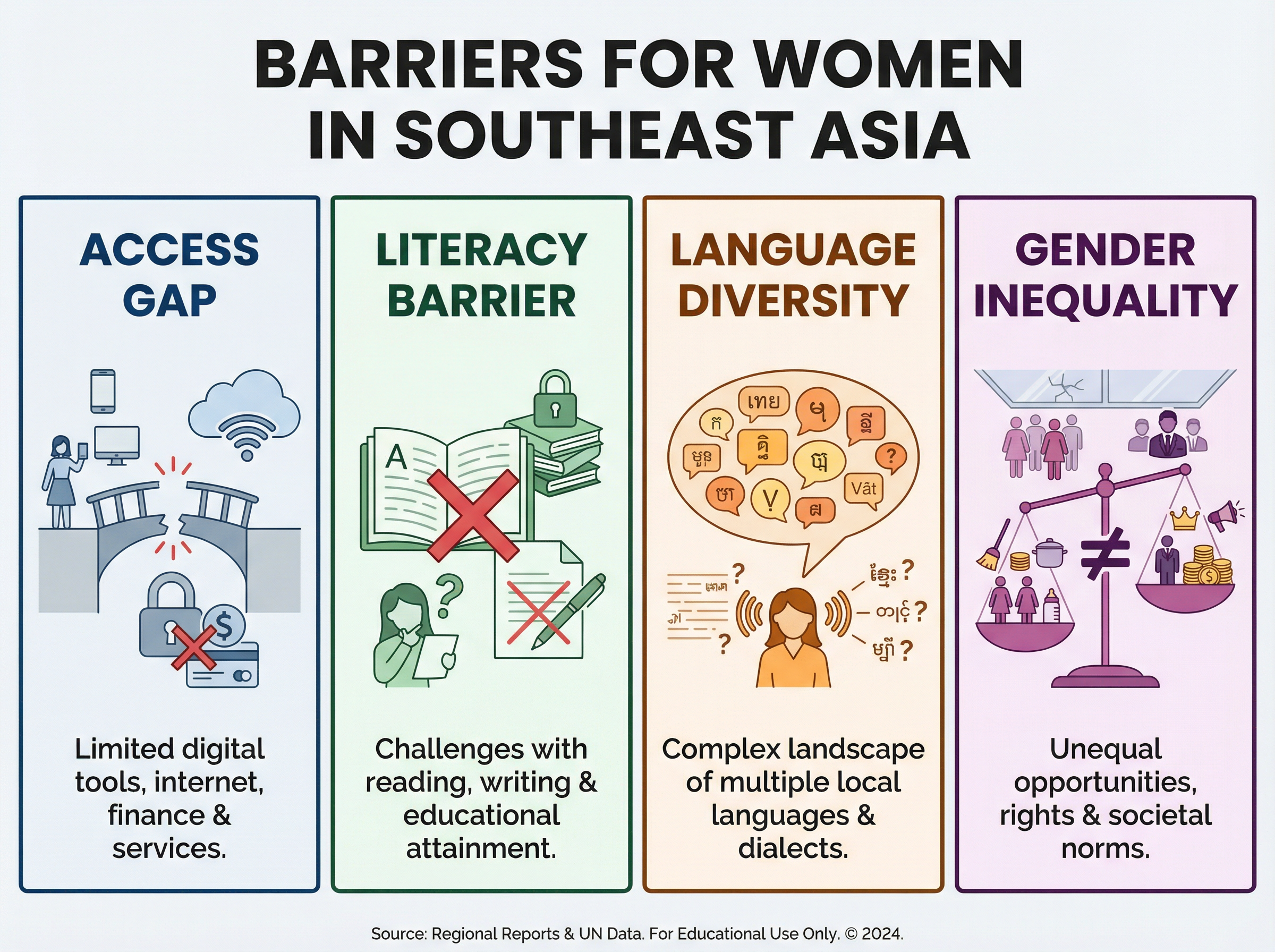
Many rural women lack reliable internet and can only afford basic mobile phones, limiting their access to digital services.
Millions of women have limited or no literacy in their native language, making text-based interfaces unusable.
Southeast Asia has thousands of languages and dialects, but most technology only supports major global languages.
Cultural barriers often prevent women from accessing education, financial services, and decision-making power.
Key Insight: Traditional digital solutions assume users can read, have internet access, and understand dominant languages. For millions of underserved women, none of these assumptions hold true.
Voice-based artificial intelligence offers a revolutionary approach to reaching underserved populations. Here's why it works:
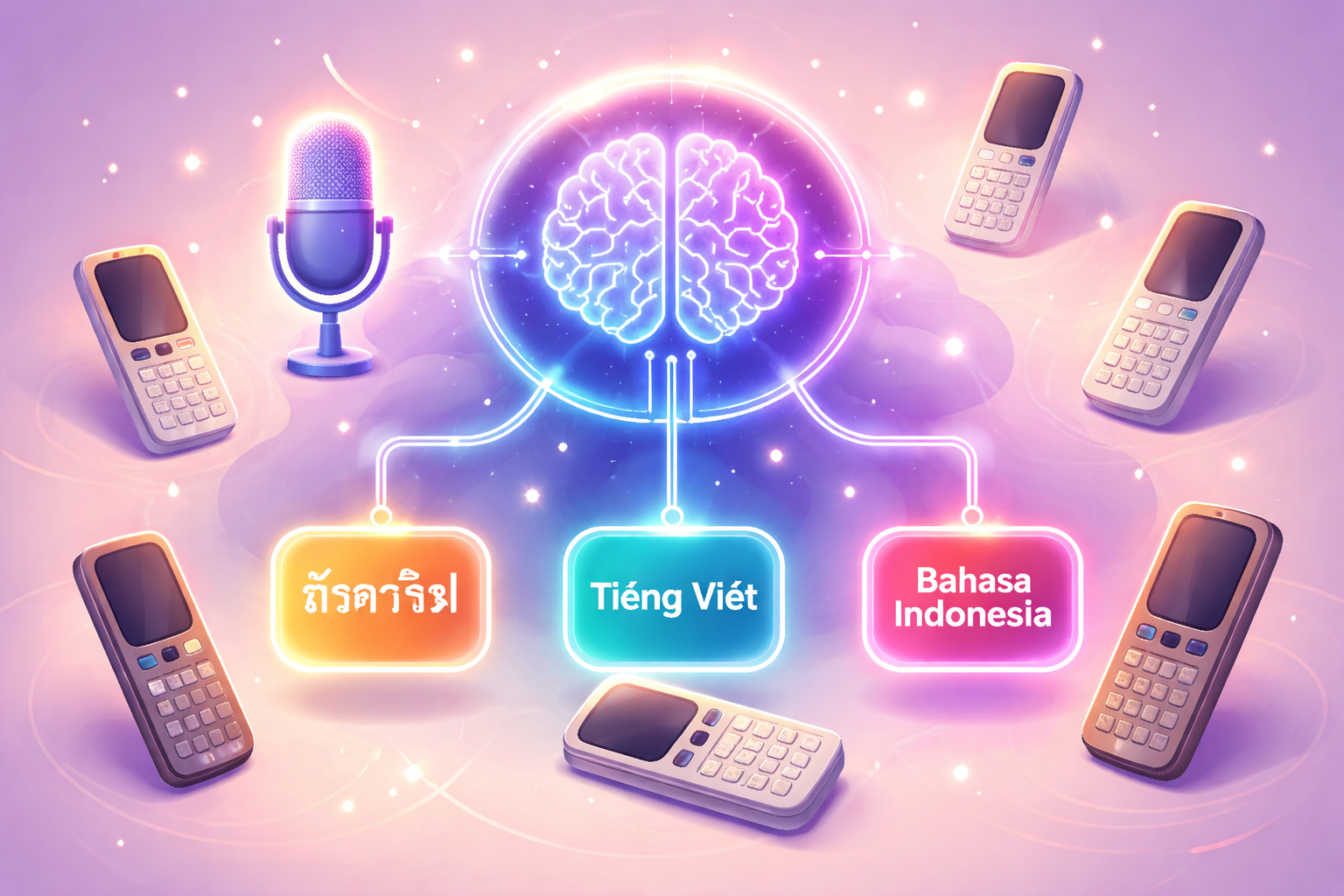
Users interact entirely through speech, eliminating literacy as a prerequisite for accessing information.
Interactive Voice Response (IVR) systems work on any mobile phone, even without internet or smartphones.
Modern AI can be trained on regional dialects, making technology accessible in users' native tongues.
Voice interfaces naturally accommodate different abilities, education levels, and technological experience.
Real Innovation: In Indonesia, pilot programs use IVR to deliver digital literacy training through short recorded modules that displaced people can access offline, in their local language, without reading.
AI-powered agricultural support is transforming lives for rural women farmers across Southeast Asia.
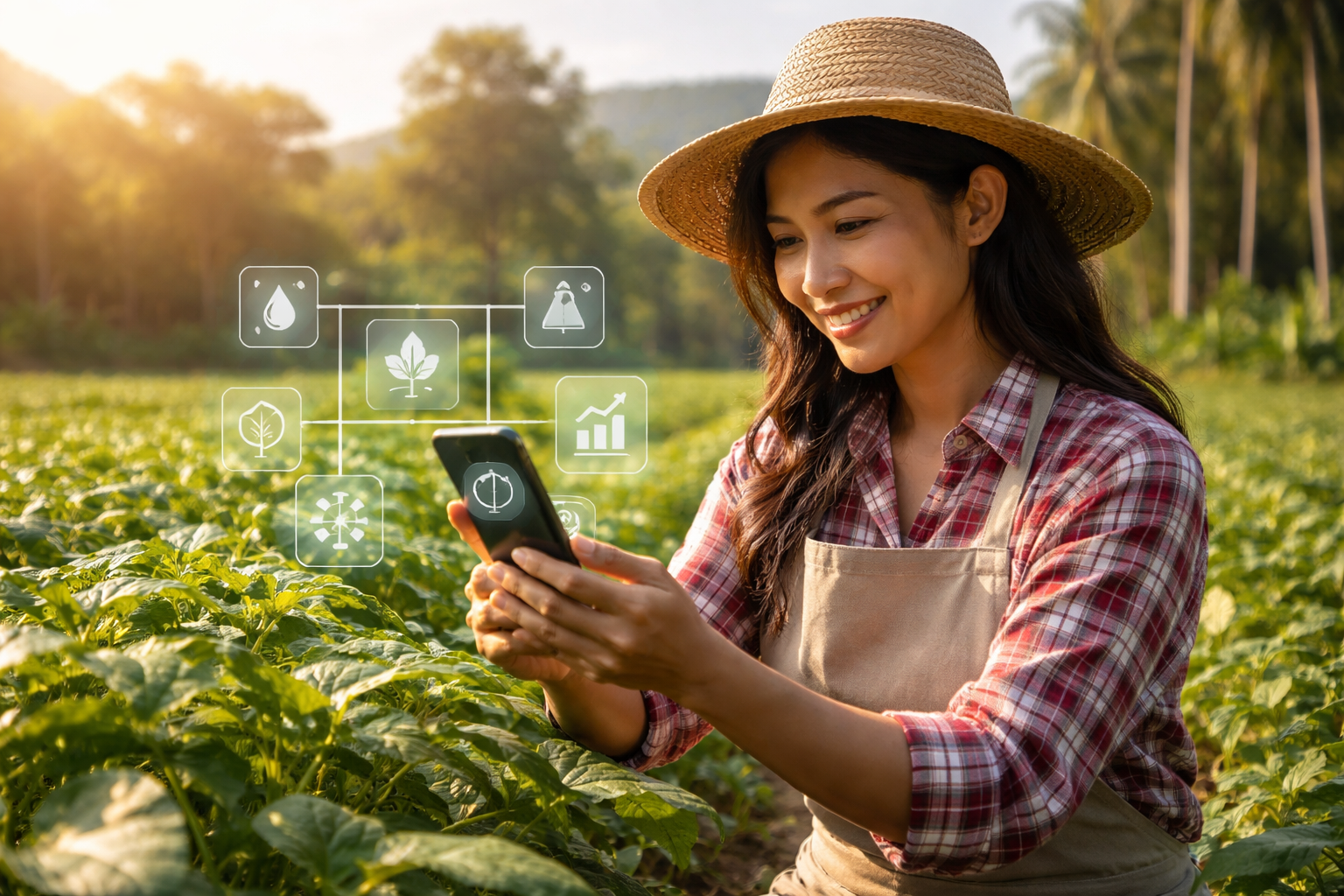
Impact Story: Aibono, an AI-powered platform, advises smallholder farmers on optimal sowing and harvesting times using agronomic analytics. Women farmers report increased yields and income, with decisions now based on data rather than guesswork.
Healthcare information is often inaccessible to women in remote areas. AI is changing this through multiple channels.

AI-powered chatbots and voice systems provide mental health resources and psycho-social support, especially valuable for youth and women in male-dominated communities where seeking help carries stigma.
In India and Southeast Asia, audio content platforms deliver health information in multiple local languages through low-tech and offline methods, reaching women who cannot access written materials.
Privacy & Safety: Voice-based systems can be designed with privacy features crucial for women discussing sensitive health topics. Unlike text messages that might be read by others, voice interactions can be immediate and leave no visible trace.
Financial inclusion and economic opportunity are key pathways out of poverty. AI enables new possibilities for women entrepreneurs.
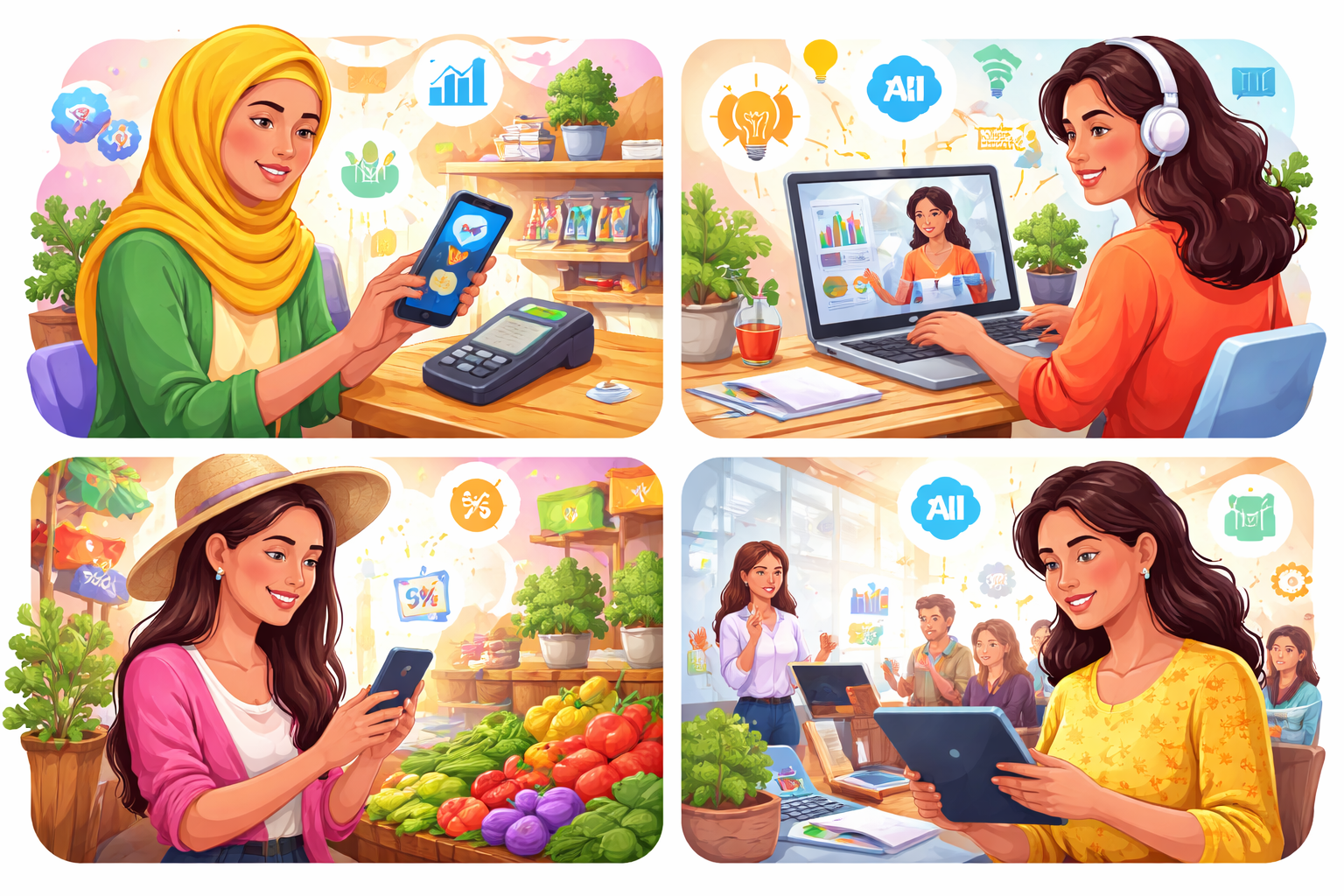
Machine learning uses alternative data to assess creditworthiness of women microentrepreneurs in Indonesia, enabling access to loans without traditional banking history.
Organizations like Connected Women use AI to match Filipino women working from home with career opportunities, creating economic pathways from rural areas.
Voice-based systems provide real-time market prices, helping women entrepreneurs negotiate better deals and maximize profits.
Free online AI and digital literacy training reaches underserved youth and women across Asia, building capacity for the digital economy.
Multiplier Effect: When women gain economic independence, entire families benefit. Studies show women reinvest up to 90% of their income back into their families and communities, creating ripple effects that lift entire villages out of poverty.
Creating AI that truly serves underserved populations requires intentional design. Here are the evidence-based principles:
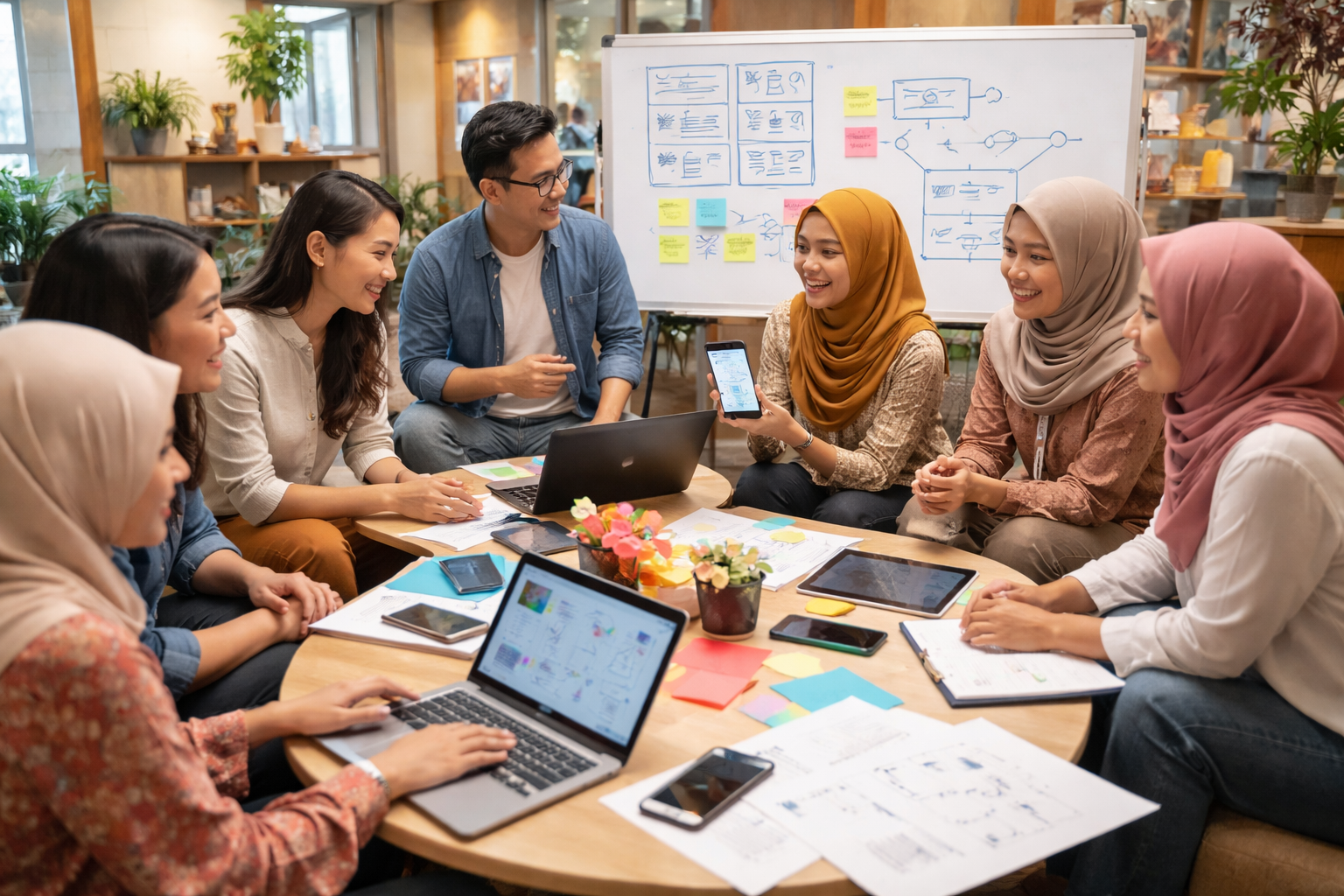
Involve target users throughout development. Smallholder farmers' voices must be heard in the machine learning development process, not treated as passive recipients of technology.
Build AI that works in local languages from the start, not as an afterthought. This requires training models on regional dialects and understanding cultural contexts.
Design for basic phones, intermittent connectivity, and limited data plans. Offline functionality and low-bandwidth solutions are essential, not optional features.
Ensure women can safely use technology without fear of surveillance, judgment, or control by others. This is especially critical in male-dominated communities.
While AI shows tremendous promise, it's crucial to acknowledge real challenges and avoid technological solutionism.
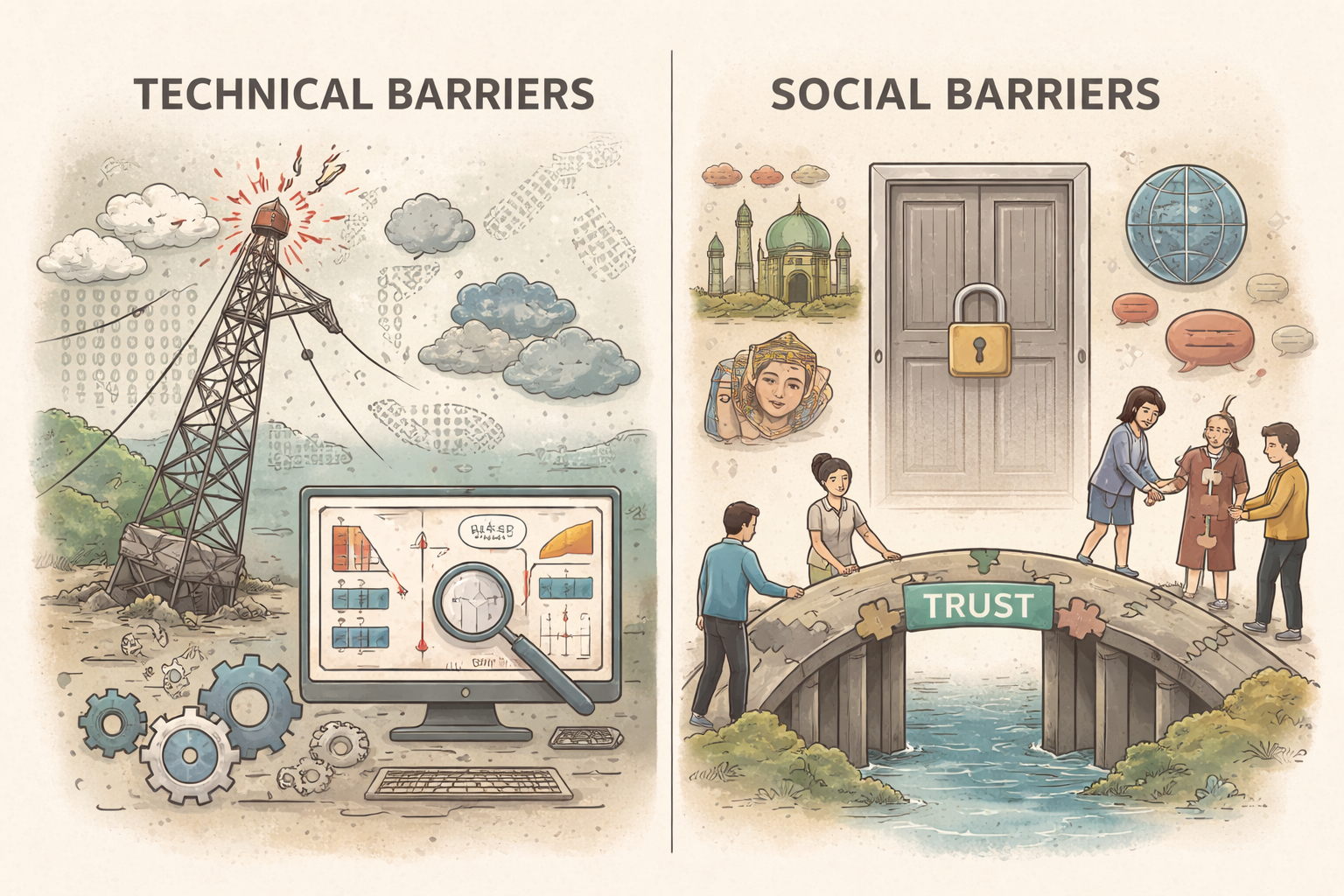
Critical Perspective: Technology alone cannot solve deeply rooted inequalities. AI tools must be part of comprehensive interventions that address education, legal rights, cultural change, and economic structures. Beware of tech evangelism that ignores these realities.
Deploying AI in vulnerable communities raises critical ethical questions that must be addressed proactively.

Who owns the data generated by underserved women? How is it protected? Can it be used for other purposes? Communities must have transparent information and genuine consent, not just terms-of-service checkboxes.
AI projects must benefit the communities they serve, not extract value for external corporations. Business models should be sustainable and fair, with communities having stake and voice in governance.
AI must respect local values, traditions, and social structures. Well-meaning interventions can backfire if they ignore cultural context or impose external values inappropriately.
Power Dynamics: Technology interventions in vulnerable communities involve inherent power imbalances. Ethical AI requires constant vigilance against paternalism and genuine commitment to community self-determination.

This regional program broadens digital skills participation across Southeast Asia, specifically reaching individuals and communities with the most to gain. It provides free training in AI, digital literacy, and workplace skills to underserved youth, including many young women.
The United Nations Development Programme helps women and girls close the digital skills gap and navigate an increasingly STEM-driven economy through capacity-building efforts that expand AI and digital literacy with a strong focus on education-to-employment pathways.
This organization uses AI to generate career opportunities for Filipino women working from home or in far-flung areas, demonstrating how technology can overcome geographical barriers to economic participation.
Common Success Factors: These programs share key elements: local partnerships, user-centered design, sustainable funding models, and measurement of real impact beyond just user numbers.
The intersection of AI and social good in Southeast Asia is still in early stages. Emerging opportunities include:
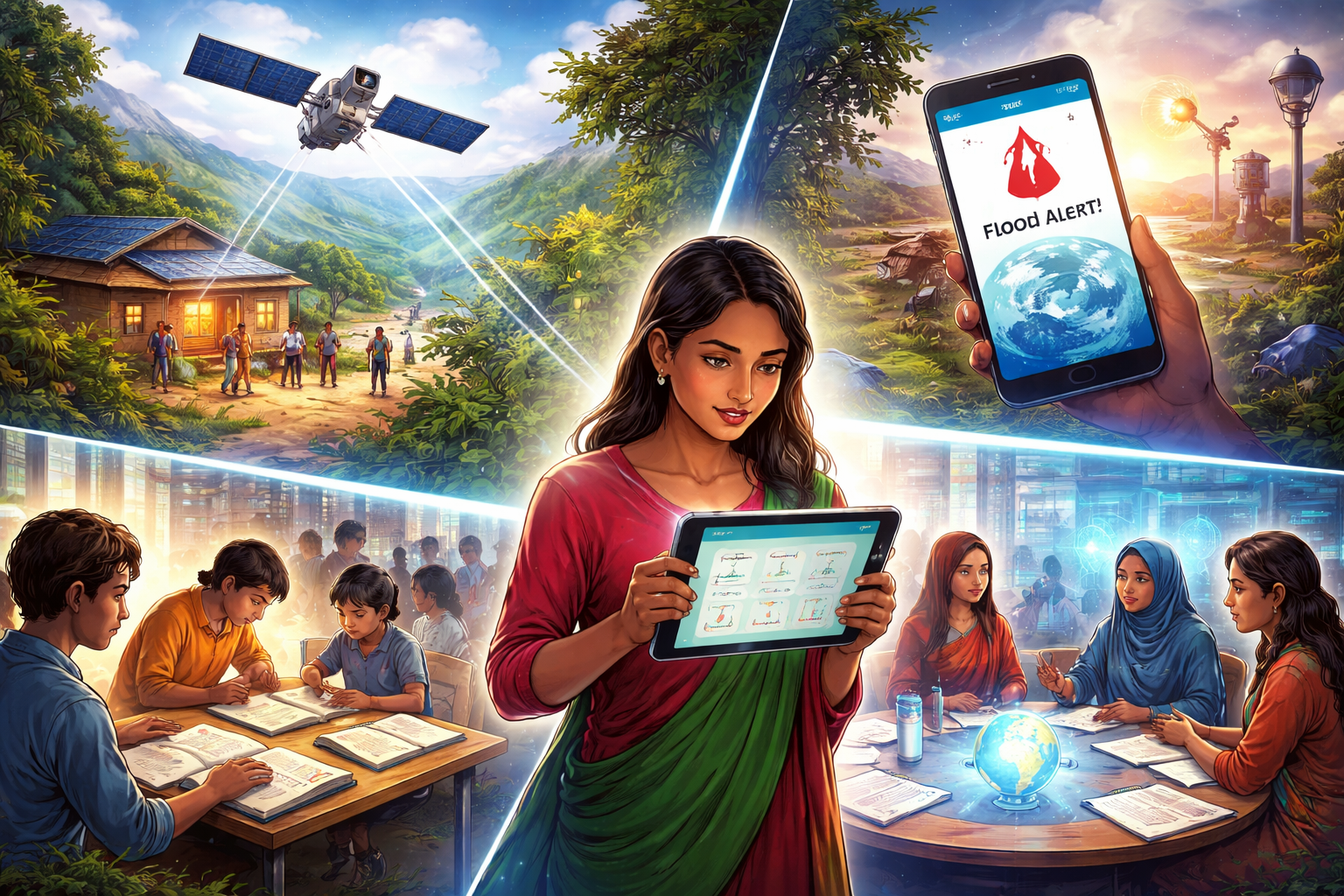
AI-powered early warning systems for natural disasters, helping vulnerable coastal communities prepare and adapt to climate change impacts.
Satellite internet and mesh networks combined with AI could reach the most remote populations previously beyond digital access.
Adaptive learning systems that work in local languages and accommodate different literacy levels, enabling lifelong learning for all.
AI can analyze data to inform more equitable policies and ensure that women's voices are heard in decision-making processes.
Your Role: Whether you're a developer, designer, policymaker, or advocate, you can contribute by: centering underserved communities in your work, learning from existing initiatives, advocating for inclusive design standards, and supporting organizations doing this work.
Understanding AI for social good is the first step. Here's how to translate knowledge into action:
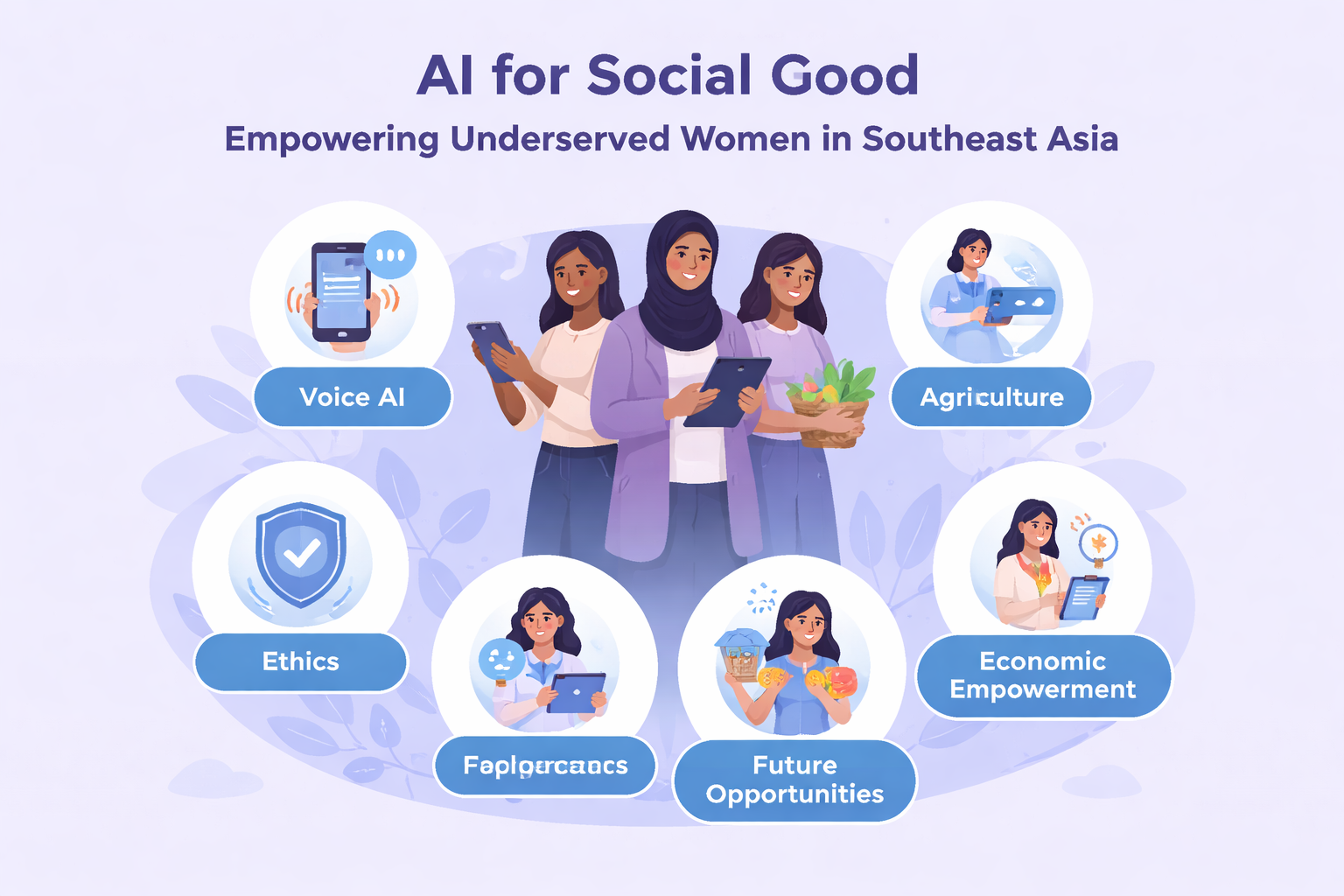
Big Picture: AI can meaningfully empower underserved women in Southeast Asia when it is voice-first, multilingual, and designed for low-connectivity, low-literacy contexts. Impact is strongest when AI is embedded in wider efforts around education, rights, and economic opportunity.
Women face intersecting barriers: limited literacy, language diversity, gender norms, and weak digital infrastructure.
Voice-based AI and IVR systems on basic phones enable access to agriculture, health, and finance information.
Co-design with communities, prioritize local languages, assume scarce resources, and build privacy & safety in.
Avoid solutionism and exploitation: address bias, share benefits fairly, and embed AI in broader social change.
As you start the assessment, ask yourself: "Does this idea center underserved women, respect their context, and use AI as one tool in a larger justice-focused effort?" If yes, you're applying the core principles from this lesson.
You've explored how AI can empower underserved women in Southeast Asia. Now let's assess your understanding through a scored evaluation.
Take your time: Think critically about each question. These aren't just recallask you to apply what you've learned to new scenarios.
Click Next when you're ready to begin.
0 out of 5 correct